By Jose Anguiano
May 31st, 2023
It has been five years since “Spider-Man: Into the Spider-Verse” changed the animation landscape with its unique art style that influenced other animated projects – “The Mitchells vs the Machines”, “The Bad Guys”, “Moon Girl and Devil Dinosaur”, “Puss in Boots: The Last Wish” and “Teenage Mutant Ninja Turtles: Mutant Mayhem”.
In fact, it became the first Sony Pictures Animation film to win an Oscar, and it broke the bias of Disney and Pixar films winning every year by default after 2011’s “Rango”:
Although 2021’s “Spider-Man: No Way Home” stole its thunder thanks to the culmination of past cast members like Alfred Molina, Willem Dafoe, Jamie Fox, Andrew Garfield and Tobey Maguire, the Spider-Verse re-entered the public conscience with “Spider-Man: Across the Spider-Verse” entering theatres this week.
Does the original still hold up?
Behind all the animation innovations is an origin story that realizes how popular superhero movies are and adds its own twist to the formula.
Given the many reboots that focused on a young Peter Parker, it’s refreshing to see Miles Morales take the spotlight and clash with an older, cynical Parker for a change:
Their collaboration leads to more conversations with other incarnations like Spider-Woman, a noir Spider-Man voice by Nicolas Cage, an anime girl that would fit in the “Sailor Moon” franchise and a talking pig that could teach Daffy Duck a thing or two about modern cartoon violence.
The stakes are high for both the city and Morales despite all the comedic hijinks.
All the new takes on the villains from Doc Ock to Kingpin make for some of the best on screen moments involving the web slingers, one of which is personal for Morales:
Given how everyone had a heart attack over one second in the sequel’s trailer, this would’ve been labeled as woke if it was released today with all the liberties taken with several iconic characters, like a female Dr. Octopus.
Anytime Kingpin is on screen, he takes up half the frame which is clever in both character design and storytelling.
If he had more screentime, he would’ve been as memorable as Vincent D’Onofrio’s take in the “Daredevil” television series.
Looking back, it seems like this only scratched the surface of the idea, especially since the characters don’t get as much development in this crossover.
But for an origin story that will expand in the sequel, this is a strong foundation.
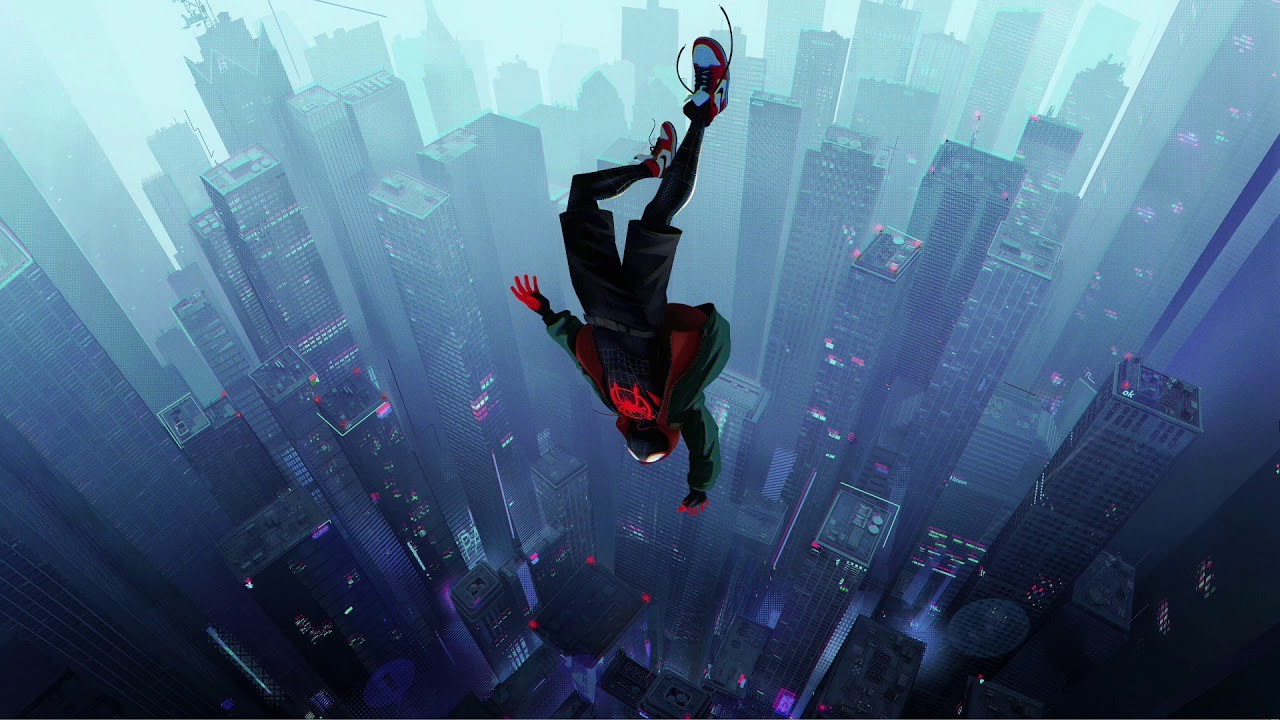
Circling back to the animation after reading the art of the movie book, it’s still as amazing now as it was five years ago.
In an age where every studio copied the pseudo realistic Pixar aesthetic, this broke the mold by messing with the timing in framerates and combining different styles in one setting.
Being a modern animated film, computers were used to bring this to life, but it doesn’t sacrifice the brush strokes and detailed circles found on the pages of Marvel comics.
Every paused frame can be hung in a museum for how much work went into the poses, colors, anatomy, angles, action, and weather effects in this version of New York City.
The only downside is that it is unwatchable for people with epilepsy given all the flashes and strobe lights in between the kicks and punches.
This, along with “Incredibles 2”, prompted movie theaters to post warnings signs about films with bright flashes.
Also, don’t watch this at 60 frames per second because this film wasn’t made with high frame rate in mind. It messes with the comedic timing, and it distorts the action sequences since every frame of animation is taken into account for each scene. That’s something AI can’t comprehend.

 Cinematic Bandicoot